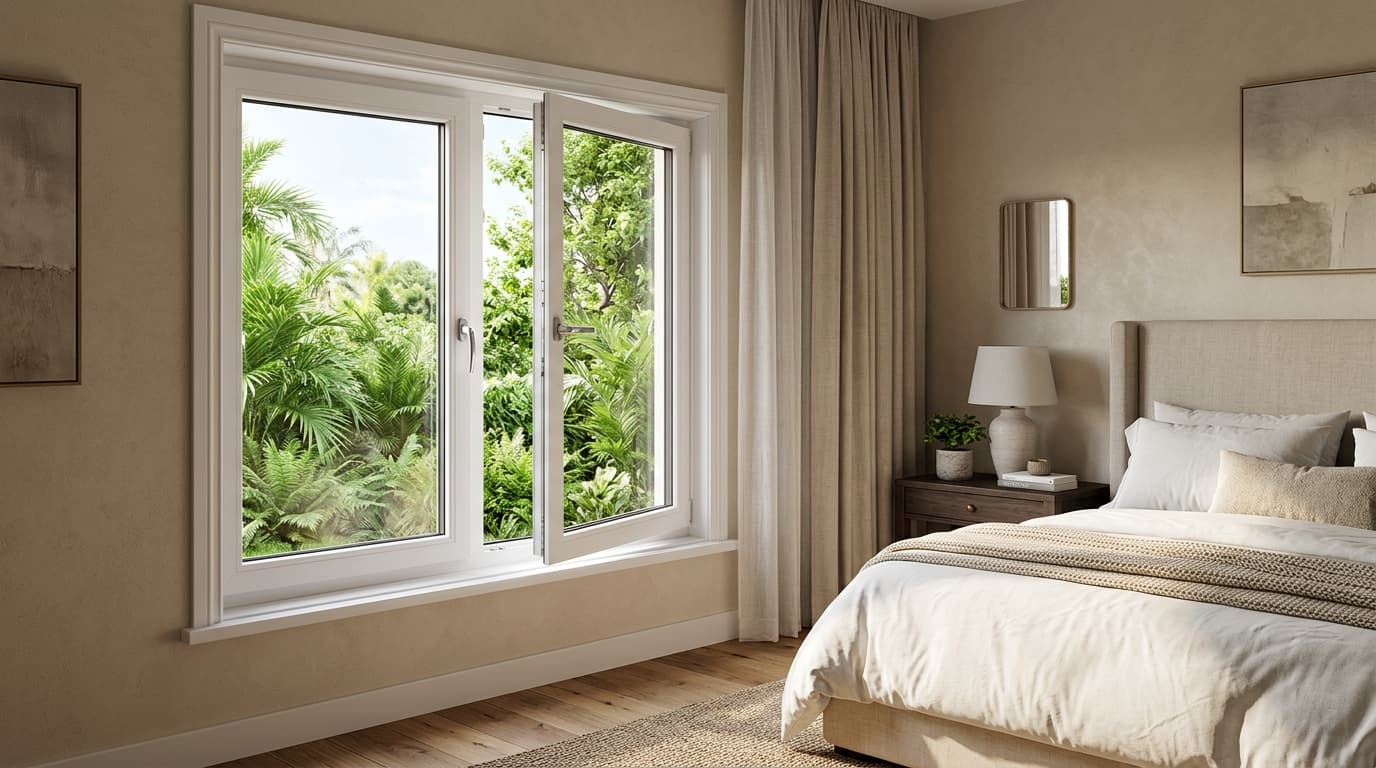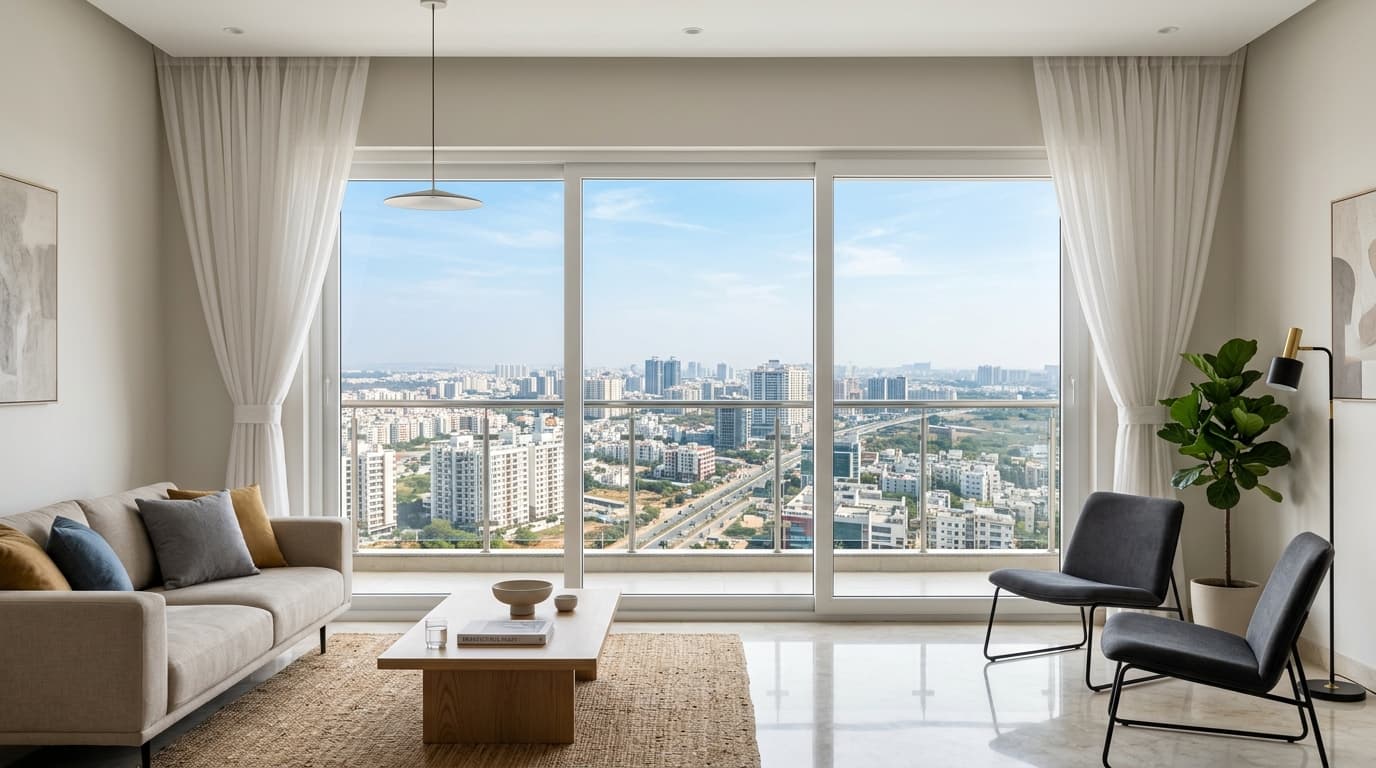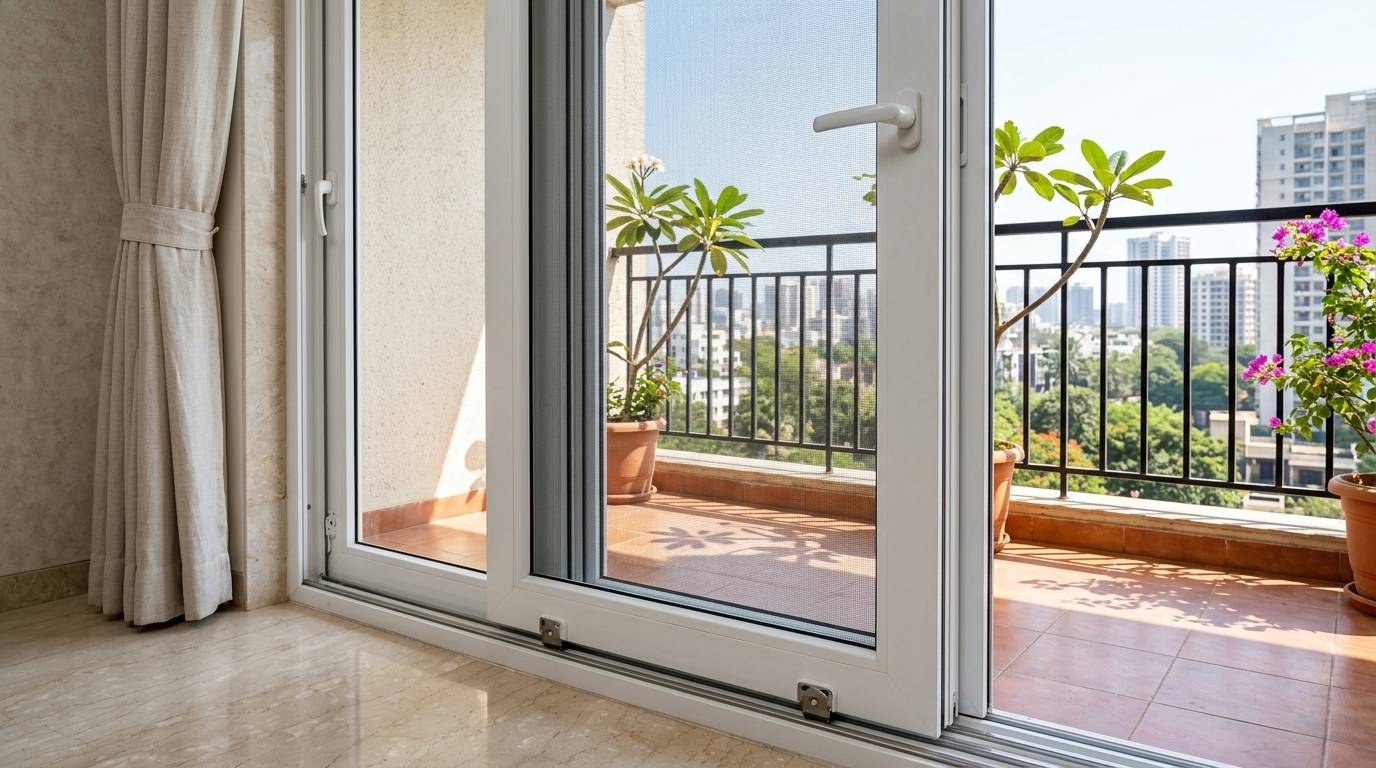
For decades, Indian homes defaulted to wooden frames (which required endless polishing) or basic aluminum (which rattled in the wind and turned your home into an oven). But over the last five years, Unplasticized Polyvinyl Chloride (uPVC) has aggressively taken over the luxury real estate market.
Are the claims true? Does uPVC really lower your AC bills? Is aluminum officially outdated? Let’s settle the debate with pure engineering, thermal dynamics, and a true 10-year cost-benefit analysis.
1. The Interactive Material Matrix
Before we dive into the deep engineering, use this interactive matrix to weigh your priorities. Toggle what matters most to your build, and see which material mathematically wins.
2. The Thermal Reality: Why Your AC Bills Are Skyrocketing
The climate in Hyderabad is unforgiving. When temperatures hit 42°C (107°F), your windows are the primary battleground against heat.
Aluminum is a highly conductive metal. In architecture, we call this a thermal bridge. When the sun bakes the outside of an aluminum frame, that heat travels directly through the metal and radiates into your air-conditioned living room.
uPVC is an inherently poor conductor of heat. But the real magic lies in its geometric engineering. Premium uPVC frames are extruded with multiple internal chambers.

These chambers trap pockets of "dead air." Since still air is one of the best natural insulators on the planet, the exterior heat simply cannot cross the threshold. When paired with Argon-filled double glazing, uPVC frames can reduce solar heat gain by up to 40%, dramatically dropping the workload on your AC compressors.
Wood, while naturally insulating, eventually cracks and warps under extreme Indian summers, breaking the airtight seal and letting hot drafts inside.
3. The Aesthetic and Structural Evolution
Historically, architects loved aluminum because of its slim sightlines. However, modern uPVC engineering has closed that gap. By reinforcing the hollow chambers with galvanized steel cores, uPVC can now support massive, heavy glass spans without the thick, bulky frames of the past.
4. Head-to-Head: The 10-Year ROI
Let’s look at how these materials perform over a decade. While basic aluminum might seem cheaper on day one, the total cost of ownership tells a very different story.
| Feature | Premium uPVC | Standard Aluminum | Timber Wood |
|---|---|---|---|
| Thermal Insulation | Exceptional | Poor | Good |
| Acoustic Rating (Noise) | High (Up to 40dB drop) | Low (Prone to rattling) | Medium |
| Maintenance Need | Zero | Low / Medium | High (Termites/Rot) |
| Lifespan | 30+ Years | 15–20 Years | 15+ Years (If maintained) |
| 10-Year ROI | Highest (Energy savings) | Low | Negative (Upkeep costs) |
The Final Verdict
If you are looking for the absolute cheapest temporary solution for a warehouse or a shed, basic aluminum still holds a place in the market. If you are restoring a 200-year-old heritage palace, authentic timber wood is unmatched in historical charm.
But if you are building a modern home, villa, or luxury apartment in 2026, uPVC is the undisputed champion. It mathematically outperforms aluminum in thermal efficiency, soundproofing, and lifespan, ensuring your home remains a quiet, cool, and peaceful sanctuary.