
Mosquito screens are the unsung, essential heroes of our modern homes. They seamlessly let in the fresh, cooling evening breezes while acting as an impenetrable barrier against disease-carrying mosquitoes, pesky flies, and airborne urban dust. However, over time, these screens silently transition into massive, invisible filters. They trap microscopic dirt, seasonal pollen, and heavy city grime. A severely clogged screen does not just look aesthetically unappealing; it drastically restricts natural indoor airflow and can even cause permanent chemical degradation to the mesh material itself.
Because modern residential architecture utilizes a wide variety of advanced screen types—ranging from heavy-duty stainless steel double doors for main entryways to highly delicate pleated window systems—a generic, one-size-fits-all cleaning approach is a recipe for disaster. If you attempt to vigorously scrub a delicate pleated track screen the same way you would a rigid stainless steel one, you will inevitably ruin the internal mechanisms. Furthermore, in bustling, developing urban environments like Hyderabad, where high dust levels and sudden weather shifts are common, maintaining your screens is not just about cleanliness; it is about extending the lifespan of your investment.
In this comprehensive deep-dive, we are outlining the exact, professional-grade maintenance techniques for every single type of mosquito screen available on the market today. We ensure no detail is skipped.
The Golden Rules of Screen Maintenance
Before we dive into the specific architectural types of mosquito screens, it is vital to establish a baseline of universal rules. Regardless of whether you have fiberglass, metal, or UPVC framed screens, adhering to these fundamental dos and don'ts will prevent accidental damage during the cleaning process.
| Best Practices (Do This) | Harmful Practices (Avoid This) |
|---|---|
| Dust frequently and lightly using a high-quality microfiber cloth, a traditional feather duster, or a lint roller to prevent buildup. | Never use stiff wire brushes, abrasive scouring pads, or heavy-duty industrial scrubbing tools on the mesh. |
| Vacuum gently using strictly the soft, bristle-upholstery brush attachment on the lowest suction setting. | Avoid all harsh chemicals, including bleach, ammonia, acidic cleaners, or heavy solvents which melt plastic coatings. |
| Support the mesh firmly with one hand placed flat behind the screen while wiping the front to prevent stretching. | Do not lean, push, or apply heavy bodily pressure against the mesh, which causes sagging and frame detachment. |
1. Fiberglass (Normal) Mosquito Screens
Fiberglass is arguably the most widespread, cost-effective mesh utilized globally. It is incredibly flexible, does not dent upon impact, and is generally attached to fixed frames, Velcro strips, or simple aluminum channels. Despite its durability against rust, it is highly prone to collecting fibrous dust.
Routine Care Protocol
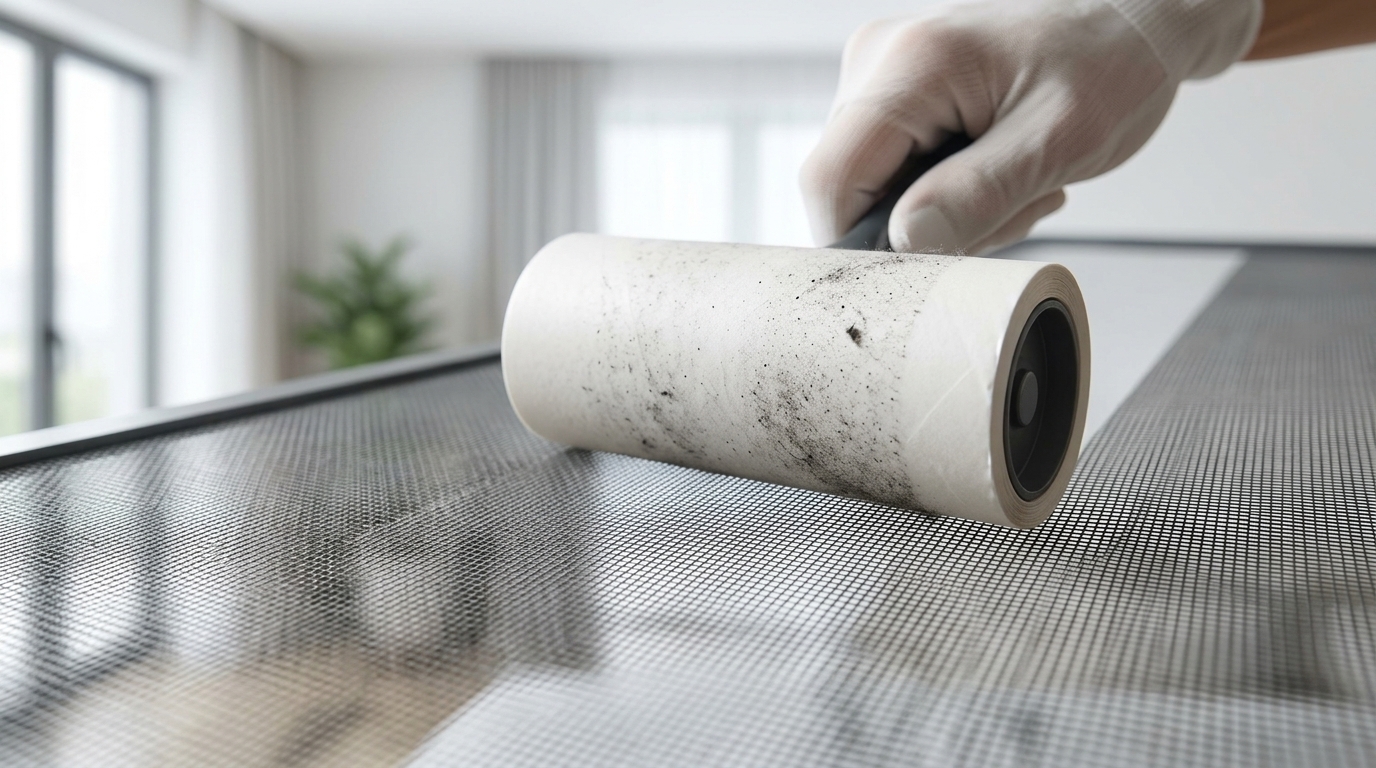
Because the woven fiberglass material possesses a slightly textured, grippy surface, it naturally grabs hold of floating lint, pet hair, and airborne dust. The absolute best tool for routine maintenance is a standard adhesive lint roller (the exact kind used for removing pet hair from clothing). Gently roll it up and down the mesh. This safely lifts dry dust off the screen without applying pressure that could stretch the flexible fiberglass fibers.
Deep Cleaning Protocol
For a thorough wash, prepare a gentle solution by mixing a few drops of mild, non-citrus dish soap with warm water in a bucket. Dip a premium microfiber cloth or a highly porous soft sponge into the solution, wring it out completely so it is damp rather than soaking wet, and gently wipe the screen starting from the top and moving to the bottom. Immediately follow up with a separate clean, damp cloth utilizing pure water to remove any lingering soap residue. Soap left on the screen will act as a magnet for new dirt.
2. Stainless Steel (SS) Fiber Mosquito Screens
Stainless steel screens represent the pinnacle of security and durability. They are functionally bite-proof, making them the ultimate choice for homes with aggressive pets, rodent issues, or for ground-floor security. They are predominantly utilized in kitchen environments and main entrance security doors.
Dealing with Kitchen Grime: SS screens installed near cooking areas inevitably attract airborne cooking grease and aerosolized oils. This grease then traps normal dust, creating a stubborn, sticky, yellowish layer. To combat this, you need a specialized degreasing dish soap or a homemade mixture of warm water and pure white vinegar. Because the SS mesh is rigid and metallic, you can safely utilize a soft nylon bristle brush to gently scrub the surface in circular motions.
Crucial Drying Step: Stainless steel must be dried meticulously with a highly absorbent, clean cotton towel immediately after washing. Allowing hard tap water to air-dry on stainless steel will result in permanent calcium water spots and ruin the premium metallic sheen of the mesh.
3. Pleated (Zig-Zag) Mosquito Screens
Pleated screens are modern architectural marvels. They feature a mesh that folds back into a highly compact, visually hidden cassette, operating on a complex system of internal tension cords. They look incredibly elegant but are without a doubt the most delicate screens to maintain. A single improper cleaning session can ruin the precise folds or snap the internal Kevlar tension cords.
Warning for Pleated Screens
Never under any circumstances scrub a pleated screen with a sponge or brush. Scrubbing destroys the heat-pressed creases, causing the screen to lose its ability to fold back correctly.
Routine Dusting: Open the screen to its fully extended position. Utilize a vacuum cleaner exclusively on its absolute lowest suction setting, paired with a soft brush attachment. It is critical that you vacuum horizontally, meticulously following the direction of the zig-zag pleats, rather than dragging the vacuum vertically across them.
Track Mechanism Maintenance: The bottom track of a pleated screen is a notorious collection zone for dead insects, heavy dirt, and pet hair. If this specific track becomes clogged, the screen mechanism will jam. If you forcefully pull a jammed pleated screen, you will instantly snap the internal cords. Vacuum this bottom track on a weekly basis and wipe it out with a slightly damp cloth to ensure buttery smooth operation.
4. Openable Double Door Mosquito Screens
Double door mosquito screens are an elegant, highly functional addition to main entrances, French doors, and large patio openings. These heavy-duty screens operate on traditional hinges and usually feature a robust aluminum or solid wooden frame encapsulating either SS or heavy-duty aluminum mesh.
Hinge and Hardware Care: Because double door screens are constantly opened and closed, the mechanical hinges bear the entire weight of the heavy frame. These hinges are frequently exposed to outdoor humidity and rain. Every three to six months, you must perform hardware maintenance. Spray a high-quality, dry silicone-based lubricant, or meticulously apply a few drops of specialized machine oil directly into the hinge pins. This completely prevents irritating squeaking and stops rust from forming.
Frame and Magnet Alignment: Wipe down the heavy door frames with a damp cloth. Most double doors utilize long magnetic strips down the center where the two doors meet to ensure a perfect, mosquito-proof seal. You must wipe these magnetic catches with rubbing alcohol to remove any metallic dust or debris, ensuring the doors snap tightly shut every single time.
5. Sliding Mosquito Screens for Balconies and UPVC Systems
For large balcony openings and modern apartment layouts, sliding mosquito screens are the absolute go-to choice. They run on dedicated top and bottom tracks. Additionally, these sliding screens are frequently integrated into UPVC (Unplasticized Polyvinyl Chloride) frame systems, known for being weatherproof, rust-proof, and fade-resistant.
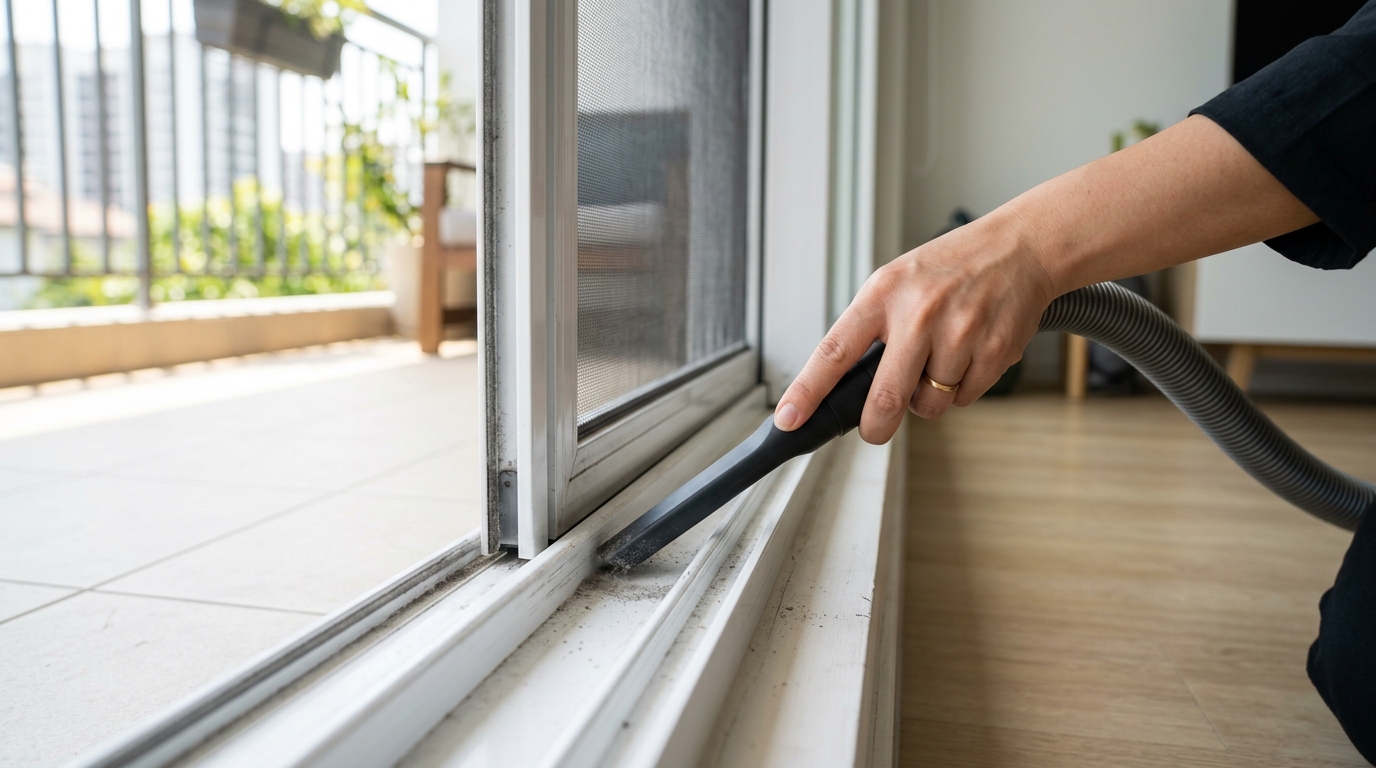
Track and Roller Focus: The screen mesh itself is quite easy to clean using the fiberglass method, but the sliding track mechanism is where 90% of maintenance failures occur. Heavy dirt builds up rapidly in the bottom channel, causing the sliding rollers to grind, degrade, and eventually derail the entire door.
Cleaning Balcony Tracks: Vacuum the tracks vigorously. Utilize an old, dry toothbrush to aggressively loosen caked-on mud and dirt in the tight corners of the balcony track, then vacuum the loosened debris again.
Lubricating UPVC and Aluminum Tracks: Once the sliding tracks are immaculately clean and totally dry, apply a dry Teflon or silicone spray directly to the tracks. Do not use liquid petroleum oils or WD-40. Wet oils act as a glue for urban dust, quickly turning into a thick, sticky sludge that will ruin the sliding rollers. For UPVC frames specifically, avoid using abrasive powders; simply wipe the bright white UPVC frames with a mild soap solution to prevent scratching the glossy finish.
6. Retractable / Roller Mosquito Screens
Retractable screens roll seamlessly up into a top-mounted overhead cassette (functioning exactly like a traditional window blind) utilizing a high-tension spring mechanism.
Moisture Control: Pull the screen down fully to expose the mesh. Wipe it incredibly gently with a damp microfiber cloth. This is the most crucial step: You must let the screen air-dry completely and thoroughly before rolling it back up. Rolling a wet screen up into the enclosed, dark cassette will create the perfect breeding ground for toxic black mold and severe mildew, ruining the screen permanently.
Tension Protection: Keep the vertical side guide-channels completely free of dust using a narrow vacuum crevice tool. Furthermore, never let the screen snap back violently up into the cassette. Always hold the handle and guide it up smoothly to protect the internal spring tension.
7. Magnetic Mosquito Screens
Often utilized as highly effective temporary, renter-friendly, or low-budget solutions, these feature a flexible mesh strictly bordered by strong magnetic strips that magically snap together after you walk through them.
Washing Procedure: These are uniquely best cleaned by taking them down entirely from the doorframe. Lay them perfectly flat on a clean tiled floor or a large outdoor table. Gently wash them with soapy water and a sponge, then rinse them completely with a garden hose or showerhead.
Magnet Restoration: Wipe the individual magnetic strips meticulously with isopropyl rubbing alcohol. If the magnets collect microscopic metallic dust from the environment, they will lose their gripping power, leaving small gaps that mosquitoes will easily exploit.
The Professional Monthly Deep Clean Routine
If you want to keep your screens looking absolutely brand new for a decade, commit to this professional 5-step monthly routine for all your fixed and sliding meshes:
- Dry Dust First, Always: Never apply water to a dusty screen. Water combined with dust creates thick mud, which then smears deeply into the microscopic square holes of the mesh. Vacuum or dry-wipe first.
- Mix the Perfect Solution: Add exactly one tablespoon of pH-neutral mild dish soap into a half-bucket of warm water. Avoid any harsh chemical detergents.
- Two-Handed Washing: Dip a soft sponge into the solution. Support the delicate back of the screen with a dry towel in your left hand, and gently wash the front of the screen with the wet sponge in your right hand.
- The Pure Water Rinse: Empty your bucket and refill it with clean, pure water. Use a brand-new microfiber cloth to wipe away all the soapy residue. Leftover dried soap will actually attract and trap new dust faster.
- Maximum Air Circulation: Leave the doors and windows completely open to allow cross-ventilation to air-dry the screens thoroughly. Wipe any metal or UPVC frames dry immediately to prevent water-spotting.
Frequently Asked Questions (FAQs)
How often should I clean my mosquito screens?
For optimal airflow and hygiene, you should perform a light dry-dusting once a week, and execute a full deep-cleaning wash with mild soap and water once every month. In highly polluted urban areas, bi-weekly deep cleaning may be necessary.
Can a torn mosquito screen be repaired, or must it be replaced?
Tiny holes (under 1 inch) in standard fiberglass mesh can be patched with adhesive screen repair tape. However, larger tears, rips in pleated screens, or damaged stainless steel meshes require complete professional replacement to guarantee they remain mosquito-proof.
Why is my sliding balcony screen so hard to move?
Stiff sliding screens are almost entirely caused by dirt, pet hair, and caked mud accumulating inside the bottom rolling track. Vacuuming the track thoroughly and applying a dry silicone lubricant (never wet oils) will instantly solve this issue 90% of the time.
Is Your Mosquito Screen Beyond Repair?
If your screens are permanently stained, heavily torn, or the tracking mechanisms are completely broken, maintenance will no longer save them. Upgrade your home's aesthetics and security with premium, professionally installed screens.
Whether you require elegant pleated windows, heavy-duty stainless steel double doors for your main entrance, or seamless UPVC sliding setups for a massive balcony, our experts deliver perfection.